We Are Like The Living Dead
They were managers, influential journalists. Until the Taliban came back and took their freedom. Der Spiegel asked thirteen Afghan women from around the country to tell their stories.
Recorded by Susanne Koelbl, photographed by Martin Gerner. March 16, 2025
About three and a half years ago, on August 15th, 2021, the Taliban took power and since then women no longer play a role in public life. Girls are no longer allowed to go to school after they turn 12, women are excluded from access to universities. The Morality Police hunts women whose hair shows in the slightest from their full-length veils.
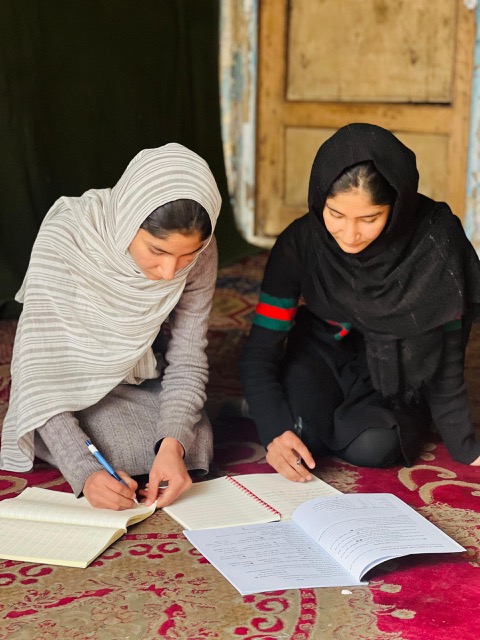
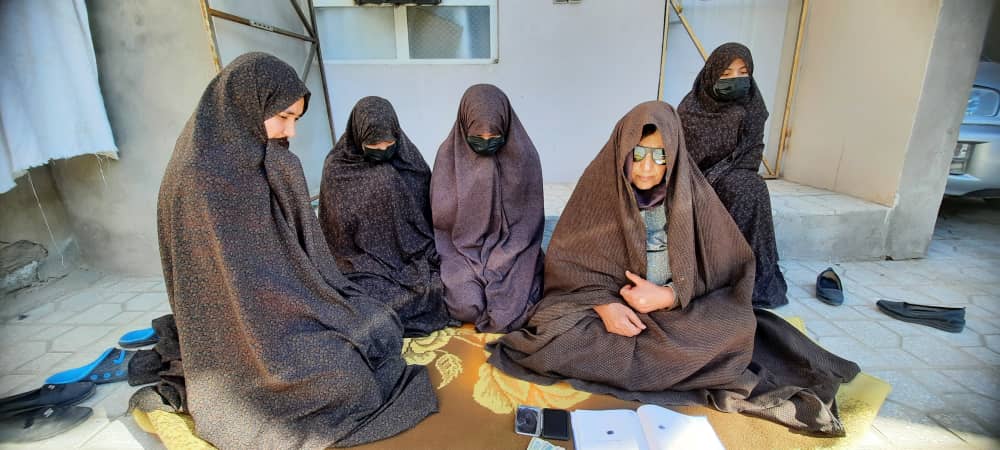
Der Spiegel asked Afghan women to report about how their everyday reality has changed under the new regime. The article is illustrated with photography by Cologne-based photographer Martin Gerner, who spent many years in Afghanistan and has captured life in the country in his book “Finding Afghanistan.”
The Whips of the Morality Police
Soman Omar, a former prosecutor, now unemployed, does not want to reveal her whereabouts for security reasons.
“The realities of Taliban rule include the arrest, detention, and public flogging of women. Last month, I saw the Morality Police stop two girls on the street and verbally abuse them. A whip hissed across the body of one of the girls. She sobbed and pleaded, ‘I will never wear colorful clothes again! Please, let me go! I will never leave the house again, I swear—just let me go!'” But the Taliban struck even harder. I ran, fleeing through the crowd of men who watched without taking any action. And the world? It watches these images behind television screens and on social media feeds, shakes its head, and says, ‘What a tragedy.’
“I lost myself.”
Hanifa Rasikh, 28, Kabul, formerly a microfinance and social worker, now unemployed.
“What have I lost? The freedom to work, to have an opinion, to educate myself, and to dress as I please. I used to work in foreign institutions and organizations, but I lost my job because of the Taliban. The Taliban strongly opposes women working with foreign organizations. In fact, I lost myself and have lived in constant fear ever since. I was once the sole breadwinner in my family. Now I have no income. My future is completely uncertain.”
Mad with fear
Zahra Atlas, 14, lives in Kabul.
“My father worked for the previous government. When the Taliban took power in 2021, he disappeared. People whispered that the Taliban were arresting government officials and executing them. We almost went mad with fear for my father.
Then, after what felt like an eternity, he called. His voice was weak. He told us he had been arrested and banned from working.
Finally, he returned, and hunger gnawed at our stomachs. My 14-year-old brother and my father have since gone to Iran to find work.
We’ve lost everything and barely have enough to survive. But I still dream of becoming a leader, a voice for Afghan girls and women. Hope can never be completely extinguished. Right?”
“I don’t get involved”
Zarghoona Salehi, journalist in Kabul.
“Women are no longer allowed to go to parks. Almost everything that used to be taken for granted is forbidden. I was lucky. I earned my bachelor’s degree in 2021, during the country’s political system change. What we once shared in public has now disappeared into the private sphere. I currently work at a news agency as head of the women’s department. That brings me joy, despite the restrictions. But I also don’t get involved in politics.”
“What is our crime?”
Sonia Rahimi, 24, a former engineering student and online teacher, lives in Herat.
“In the past, women and girls in Herat would sit in cafes or stroll through parks. My friends and I would immerse ourselves in the world of books in the library for hours.
We would go to the women’s park with our mother after prayers, drink tea, and eat fruit. The women would tell each other stories, even the painful ones. The women’s park was like a hospital where my mother cured all her friends’ mental illnesses by talking and listening.
Back then, when I opened my bedroom window in the morning, I would look out at the park and see women enthusiastically exercising there. I would see the young people on the street walking to school in their black and white uniforms. The city was bustling.
Today, when families celebrate their festivals, the sound of music and laughter must not be heard outside, otherwise the heads of the family would be arrested and imprisoned. I’m forbidden to go anywhere I used to like: school, university, work, parks, restaurants, beauty salons, parties, clubs, libraries. Only being at home is acceptable for a woman. What is our crime? What sin do we commit when we’re happy? We’re like the living dead.”
“A dream as soft as a pillow”
Kaifia Asad, 44, former head of an international school, now an online teacher in Kabul.
“There was corruption and many problems in the previous government, but at least it was elected, and we felt we could make changes, even if only in small ways. Election days gave us hope that things could improve. Democracy in Afghanistan didn’t work very well, but some participation was possible. Our voices were heard.
Under Taliban rule, there is no such hope. Decisions are made for us. The system is completely authoritarian; we have no say in anything.
When I close my eyes and go back a good three years, it feels as if that time was just a beautiful, unforgettable dream, as if I were sleeping on a soft pillow of memories. All we have left is hope and prayer for the day when the dark clouds of pain will dissipate.”
“This city is no longer belongs to me”
Saouda Erfani, 22, teacher, lives in Kabul.
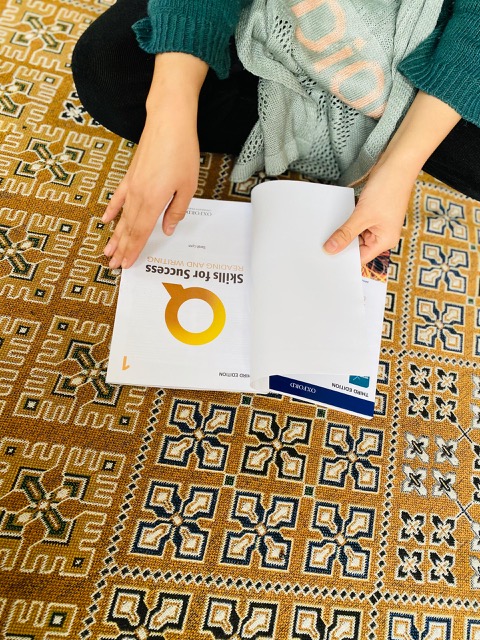
“Every morning when I wake up, I pause for a moment. I try to understand that being a woman now means being trapped within the walls of my own home. If I dare to step outside without a male guardian, I feel the stares that follow me, judge me, remind me that this city no longer belongs to me. As though I’ve committed an unforgivable sin.
My books are now gathering dust, and the diploma I once prided myself on has become worthless—a piece of paper that no longer serves any purpose. The career I worked so hard for was destroyed with the stroke of a pen. My skills remain unused, suffocated under an endless catalog of prohibitions. I can no longer even decide how I look, even the beauty salons are closed. All I can do is watch as men write laws to decide our fates.”
“Today, there is a war against women.”
Mariam Moqqadam, 32, former law student, now a seamstress in Kabul.
“I actually studied law. But now I sew clothes, and even that work is frowned upon by the Taliban. I miss the classes and the university. Today’s reality means war and violence against women and ethnic and religious minorities. Under Ashraf Ghani’s government, things were also far from perfect. But we could protest. Now we can’t anymore.”
“The world we live in is trying to silence us”
Tamseella Tanweer, 38, editor from Kabul.
“I remember how female journalists once walked freely into newsrooms and stood confidently in front of cameras. The space they occupied in the media landscape is now almost entirely dominated by male voices. Afghan female journalists today must navigate a world that tries to silence them. They are relegated to private spaces, mostly completely ignored, and threatened with violence and punishment. The opportunity to speak out, to be heard, and to contribute to society is almost nonexistent. How fragile freedom is when it is so easy to take away a woman’s right to even express herself and speak.”
“I enjoy being in cemeteries now.”
Hala, 26, a former IT student, unemployed, lives in Balkh Province.
“I belong to the LGBTQ community in Afghanistan. I can’t talk about my sexual orientation with my family or anyone else. It would endanger my life.
I studied information technology for five semesters. But for three years now, women have been banned from higher education. I recently had to drop out of a midwifery training program because that, too, was forbidden for women.
My parents want me to get married quickly. They’re not letting up and are pressuring me. But I want to decide for myself who I live with. This is why I suffer from depression. Sometimes I have thoughts of ending my life. I enjoy being in cemeteries now, a place of peace. What is the difference between a grave and my bed, where I go to sleep every night?”
The Children of Our Country
Madina Naibkhill, 24, high school graduate, unemployed, lives in Kabul.
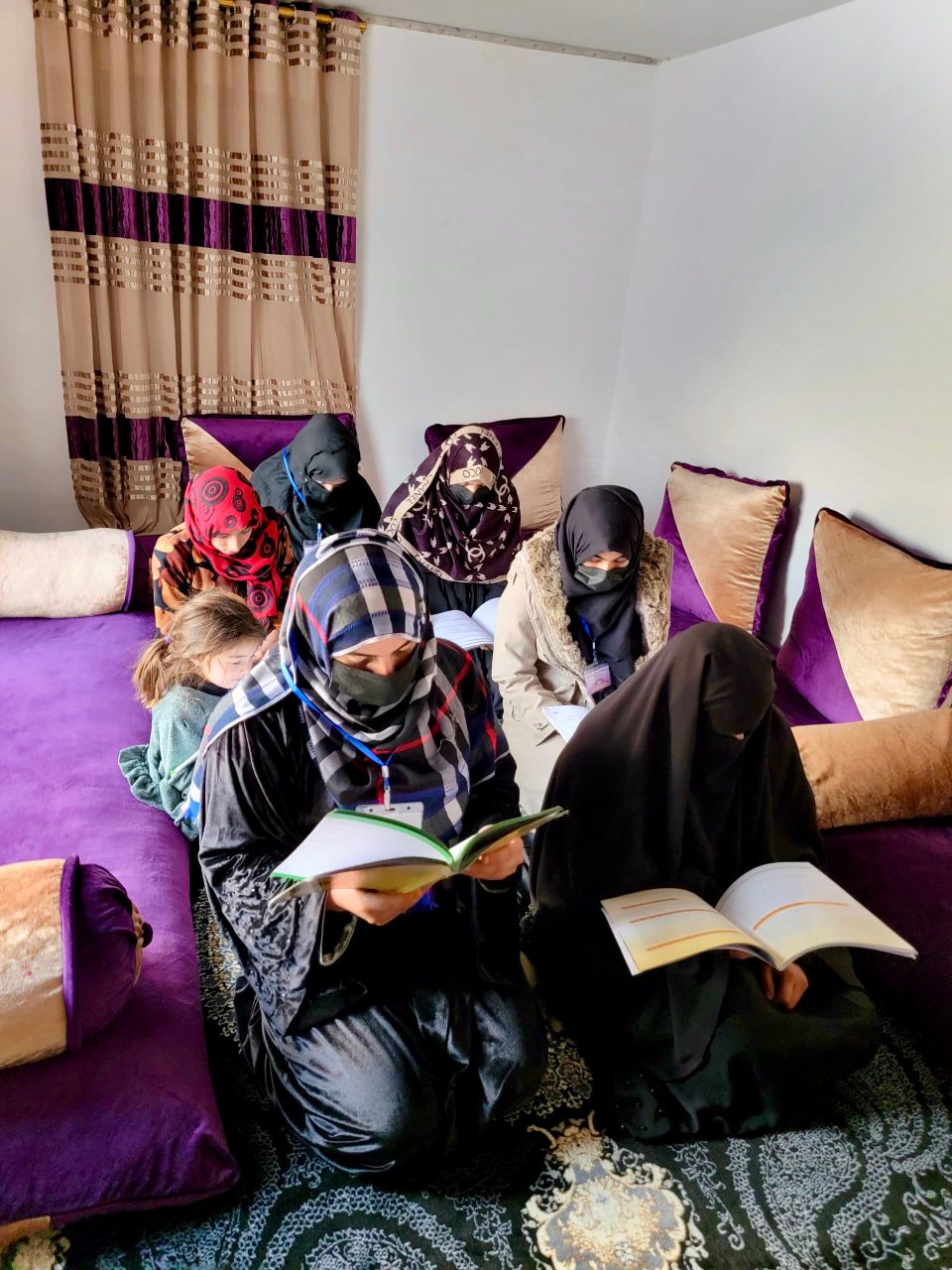
“The children of our country never had a childhood like the youth of developed countries. And now, with the widespread poverty that has returned, our children have once again lost their opportunity to learn. They have to work. They are married early. Our children deeply understand the value of knowledge, they want to improve their situation through education, and they learn despite all the difficulties, especially the girls. If someone allows them to learn, that is.”
“The Life We Left Behind”
Faryal Asadzai, 14, former student, lives in Kabul.
“There was a time when weekends in Afghanistan meant laughter and the beauty of nature. We packed early in the morning, filled baskets with homemade food, fruit, and a thermos of hot tea. We headed toward Surabhi. The fresh air, the rolling hills, and our good mood lent a magical quality to these short trips. We sat in the grass under a large cloth in the shade of tall trees. We children ran around and played while the older ones chatted and enjoyed their tea. The air smelled of earth and flowers, and the distant call to prayer from a village mosque added to the serenity. Those were days of simple happiness; the world seemed open and full of possibilities.
Then, suddenly, our freedom was taken away in the blink of an eye. Women were no longer allowed to move around without male supervision. Our joyful picnics became a distant memory. We wondered how they could take something so harmless away from us. One day, we decided to have a picnic anyway. After walking a short distance, we saw them. The Taliban. One of them approached us. His voice was firm and cold. “Women are not allowed to proceed,” he said. We turned around, defeated. That day, I realized: It wasn’t just about picnics. It was about freedom, about joy, about the simple right to experience life. The mountains, the trees, the rivers—they were still there, but we could no longer reach them.”
1,203 Days Under House Arrest
Somaia Ahmadi, 16, a former student, lives in Kabul.
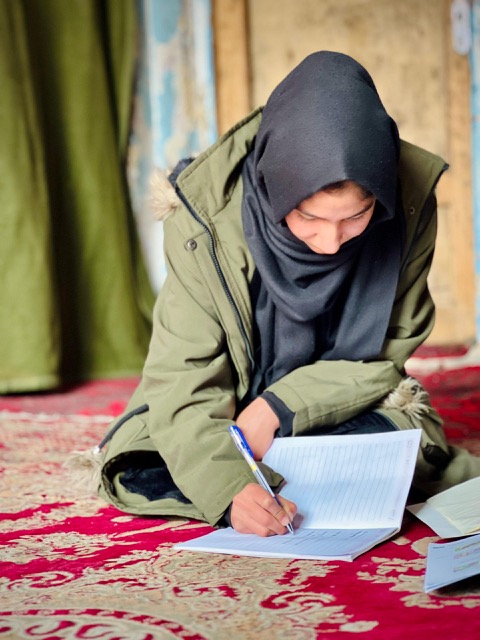
“I take my uniform out of the closet, put it on, and stand in front of the mirror. The sleeves have gotten shorter, the size is now too small for me. 1,203 days have passed since the school closed. Reality is relentless. Most of my girlfriends are married now.”